Services
Photography to explore through touch and sound
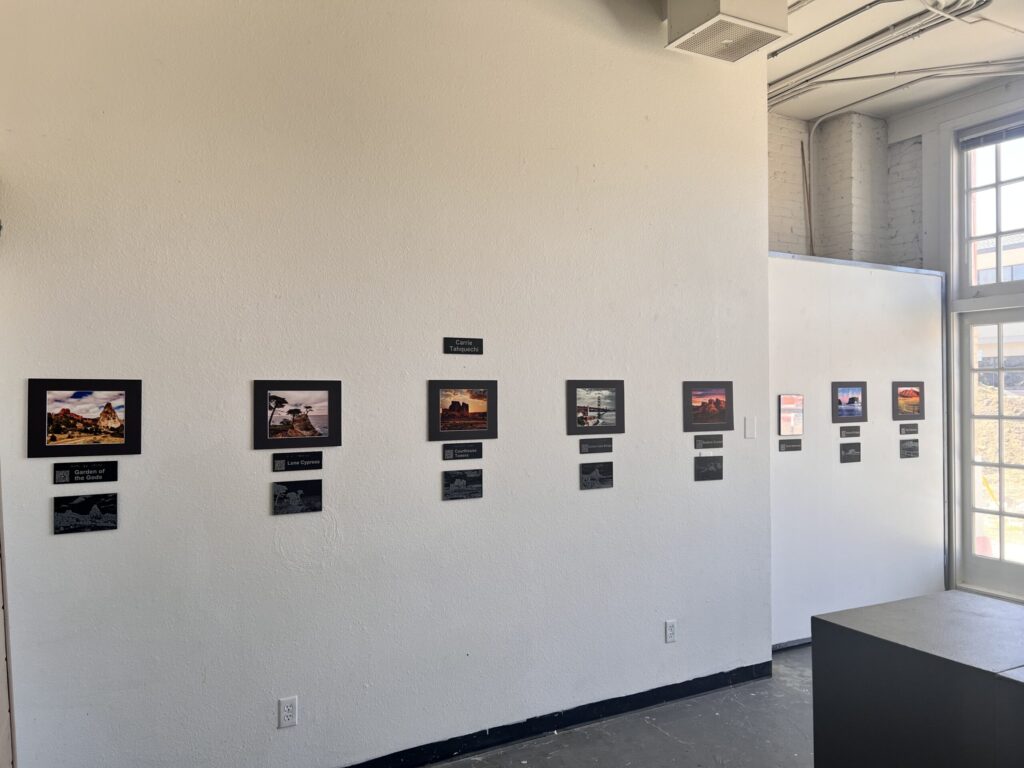
Tactile Photos exhibitions invite visitors to look, touch, and listen as they explore a collection of photographs by Ted and Carrie Tahquechi. Beaches, mountain landscapes, desert formations, and architecture offer a range of subjects, each presented with a tactile interpretation and accompanying audio.
Blind, low-vision, and sighted visitors can spend time with the same work, choosing how they explore it. Touching the tactile pieces is encouraged, and the audio provides description and orientation for those who want it.
The collection
A typical exhibition features a defined selection of approximately 15 to 20 works. The selection brings together different settings and textures, including photographs from Rocky Mountain National Park, to give visitors varied opportunities for discovery.
Each work includes three components:
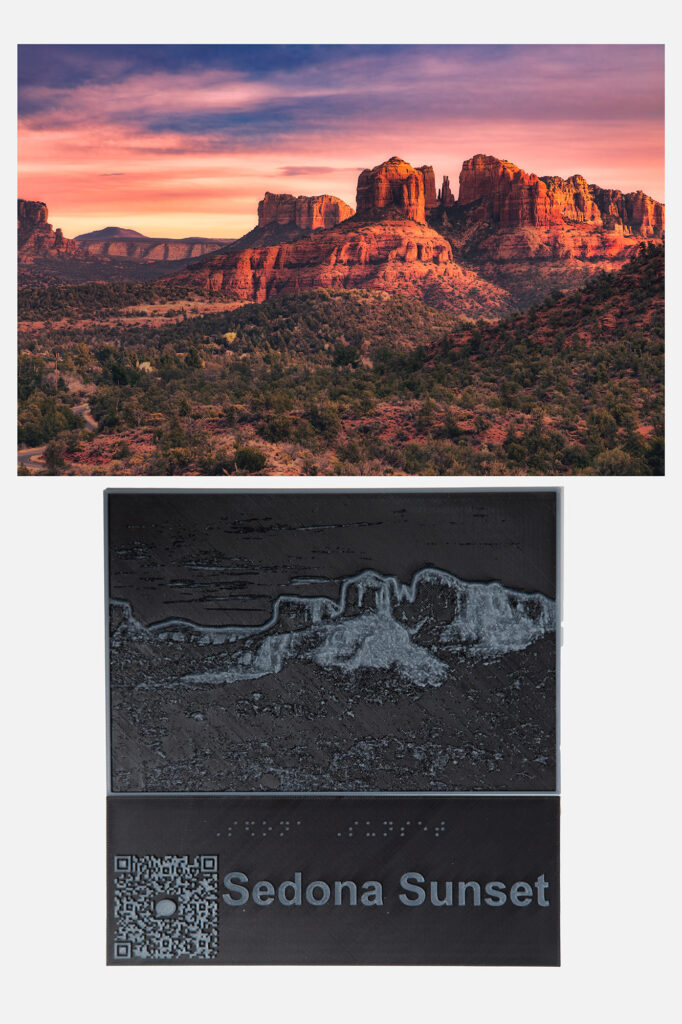
- The photograph, presenting the original image.
- The tactile relief, interpreting brightness and selected textures through raised surfaces, printed in two contrasting colors.
- The accessibility plate, providing printed identification, braille, and a tactile QR code linking to an audio description and guided tactile walkthrough.
The tactile pieces have a standard longest edge of 200 millimeters, approximately eight inches. This compact format allows visitors to explore a composition with their hands while remaining close to the accompanying photograph.
Listen to the Landscape
The audio description introduces the photograph’s setting, composition, light, and key features. A guided tactile walkthrough helps visitors orient their hands and locate features within the relief.
We are adding place-based sound throughout the collection, providing another way to experience the settings represented in the photographs. Together, description, tactile guidance, and sound offer information that visitors can explore at their own pace.
Visitors access the recordings using their own phones. The displayed artwork requires no electrical connection.
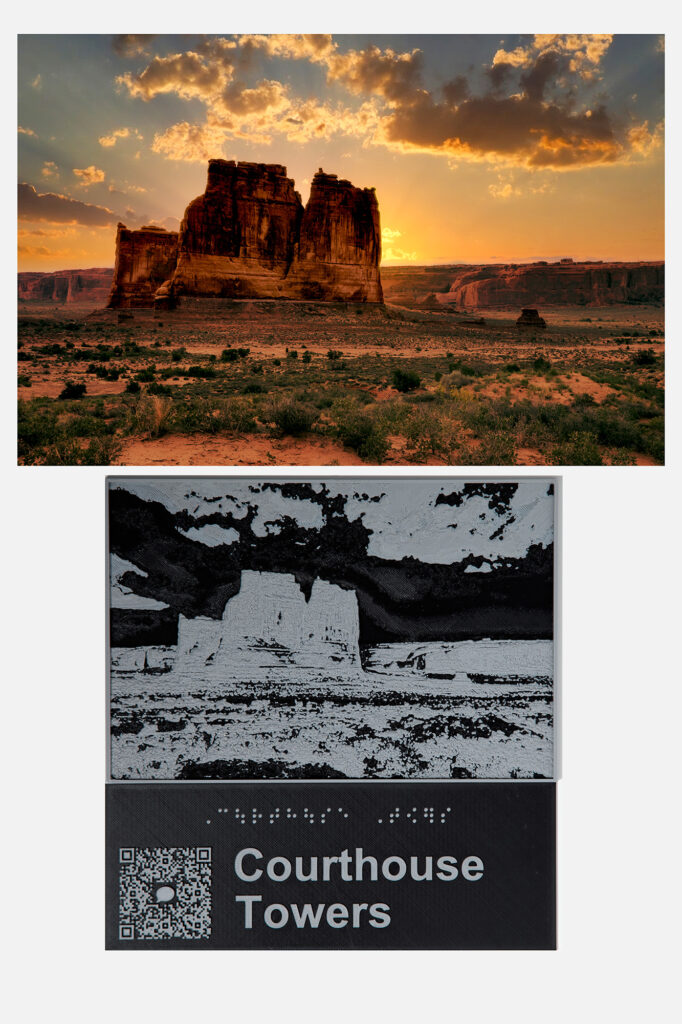
Hear an example description for the Courthouse Towers image above.
Exhibition formats
Wall-mounted exhibitions
Our standard exhibition brings the photographs, tactile reliefs, and accessibility plates together on the wall. Visitors can approach each work closely to explore its components.
We coordinate placement with the host, considering reach, spacing, and how people will move through the exhibition. Photographs are hung using the venue’s existing rail or other suitable hanging system. Tactile reliefs and accessibility plates are typically attached with removable adhesive mounting products, subject to the venue’s approval and wall-surface requirements.
Tabletop presentations and smaller displays
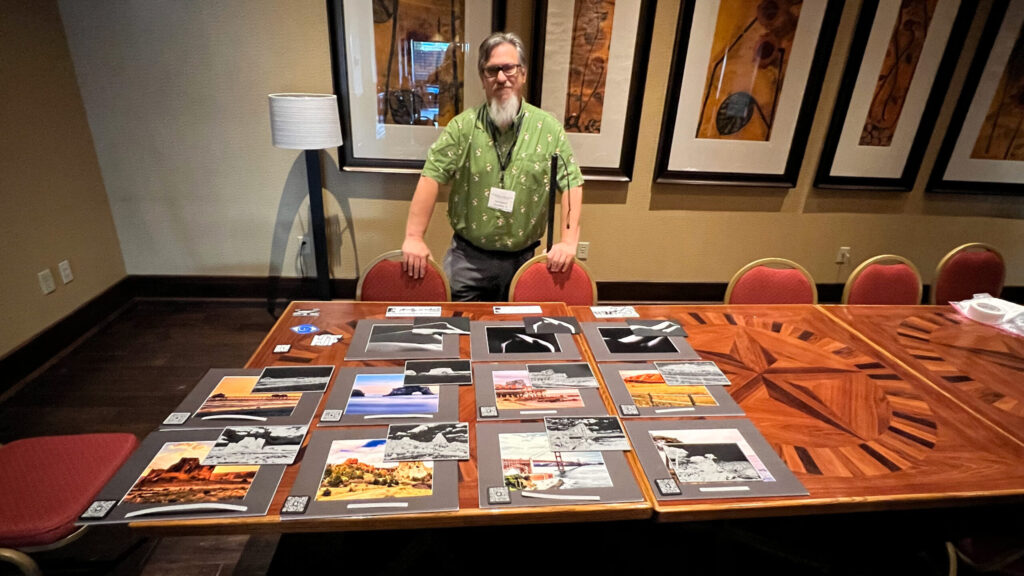
Smaller selections can be presented on tables or in suitable wall-mounted displays for community events, educational programs, and venues with limited space.
We discuss the arrangement with each host so visitors have room to approach and explore the work comfortably.
Supervised demonstrations
Demonstrations give visitors an opportunity to explore selected pieces while talking with us. We can explain how a photograph becomes a tactile interpretation, help someone get started with a walkthrough, and answer questions as they arise.
These conversations are an important part of sharing the project. Visitors bring their own knowledge of photography, touch, and the places represented, and we enjoy hearing what they discover.
Presentations and public programs
An exhibition or demonstration can be accompanied by a presentation from Ted about photography, the development of Tactile Photos, and practical ways to make visual art accessible.
Programs can serve artists, photographers, students, museum and gallery teams, disability organizations, and general audiences. We welcome conversations about a format that fits your event and the people attending.
Visit Ted’s speaking page for more information about presentations.
Shared experiences
“My fully sighted partner and I stood at the exhibit and talked about the exact same photograph for fifteen minutes.”
Exhibition visitor, shared anonymously.
Our exhibitions make room for people to explore together, ask questions, and compare what they notice. A photograph, a texture, or a detail in the audio can become the starting point for a conversation between visitors.
Exhibitions and installations
Tactile Photos debuted at the National Federation of the Blind’s 2024 national convention in Florida. The collection has since been presented through exhibitions, community events, and ongoing installations.
A permanent tactile work for Rocky Mountain National Park is currently in production, with delivery expected in early 2027.
Planning an exhibition
Contact Ted to discuss your venue, audience, proposed dates, and the format you have in mind. We will work through the selection, display arrangement, installation requirements, and any accompanying programs with you. Whether you are planning a gallery exhibition or a smaller community gathering, an initial conversation can help establish what will work in your space.